
Title VI and Language Access for Fire Departments, in Plain English
Title VI links federal funds to meaningful language access. Learn what that may mean for your department and how to build a clear plan.
By vitalvoice Team
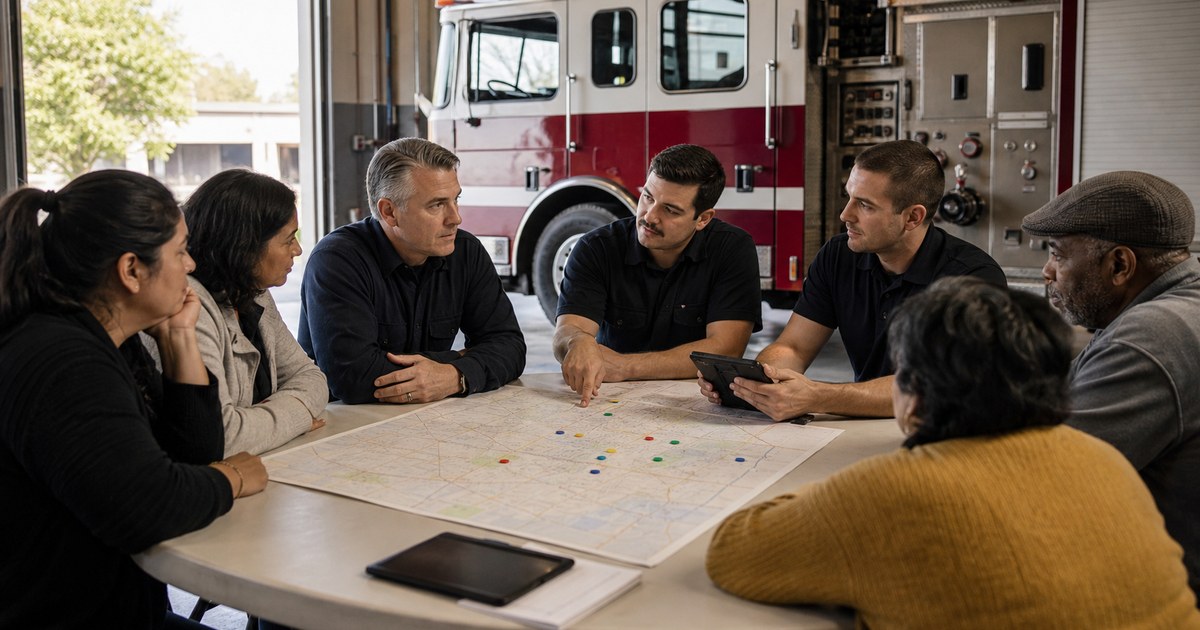
Many chiefs learn about the gap in the same way. Someone checks census or school data. The district has more languages than anyone thought. Twelve languages. Maybe twenty. Then the city attorney or a council member asks, What is our plan for those residents?
Many departments have the same honest answer: we have one bilingual engineer on B shift, and we hope he is working.
That’s not a plan. It’s a staffing coincidence. Under Title VI, the difference matters.
What Title VI actually says
Title VI is part of the Civil Rights Act of 1964. It bans race, color, and national-origin discrimination in programs that get federal funds.
The key term for fire and EMS is national origin. Federal guidance and courts have often linked language access to national-origin discrimination. The basic idea is simple. A person who speaks Spanish, Punjabi, or Vietnamese should not get worse service than a person who speaks English. Good intent alone does not fix a gap in service.
But “meaningful access” can look different in each place. Ask your city attorney what your department must do.
Why this lands on fire departments
Some chiefs think Title VI only affects hospitals. It can also affect a fire department that gets federal funds. Those funds may come through:
- Grants. AFG, SAFER, and other federal grant programs.
- Federal reimbursements. Some transport payments may come from federal programs.
- Pass-through money. Your city or county may receive federal funds and pass some to your department. You may be covered even if you did not apply for the funds yourself.
If your department has received federal money, ask your attorney how Title VI applies. Do not guess.
What “meaningful access” tends to look like in practice
There is no one federal checklist that gives every department a pass or fail. Still, a sound plan often has three parts:
Know who you serve. Use real data, not a guess. Check the census and your school district’s home-language report. School data may show a new language before census data does.
Write down the plan. A new chief should understand it in ten minutes. State what crews should do when a patient does not speak English. Name a backup if the first tool fails. Say who keeps the plan up to date.
Keep a record. You may have helped the patient. But if you cannot show what you did, the paper record looks the same as if you did nothing.
Why the workarounds don’t hold up
Every department has workarounds. They may help on one call, but they are not a full language-access plan.
A bilingual crew member. This person can help when they are free and on shift. But they cannot cover every shift, language, or call. One person cannot be the whole plan.
The patient’s family. Federal guidance warns against relying on family members. A family member may change, soften, or leave out details. If the only bilingual person is a ten-year-old, a child must carry the weight of a parent’s emergency. One pilot medic put it this way: “Usually we’re asking family on scene and they’re a little hectic, they’re all over the place.”
A consumer translation app. It may work sometimes. But it may not follow HIPAA rules or have a Business Associate Agreement (BAA). It may fail without a signal, may not find the language, and may leave no record.
Phone interpreter lines. Many departments use one in their plan. The problem is time and access. A crew may wait on hold while a patient gets worse. The line needs a signal that may not reach a basement. After the call, the department may have a bill but not a record of what was said. Read more in our guide to per-minute interpretation costs.
These workarounds share two gaps: they may not be there when needed, and they may leave no record.
The chief’s short list
If you are starting from zero, take these five steps:
- Get your language data. Check census tables and your school system’s home-language report.
- Write down what crews do now. One page is better than a plan that only lives in someone’s head.
- Give crews a tool that works on scene and creates a record. Both parts matter. Help the patient now and show what happened later.
- Review it annually. A district that had two languages in 2020 may have eight now.
- Run it past your city attorney. They know your jurisdiction’s exposure. You don’t have to guess.
Where vitalvoice fits
vitalvoice helps crews communicate on scene and keep a record of the session.
Crews get real-time interpretation in 63 languages. The app can find the language when a patient cannot name it. It also works offline, including in basements and rural areas. vitalvoice is HIPAA-compliant, and a BAA is available. Transcripts with protected health information (PHI) stay on the device and are wiped at the end of the shift.
Each session also leaves a time-stamped record. The transcript stays on the phone. Basic session data is saved, such as when the session happened and which language was used. That log can help show what your department did.
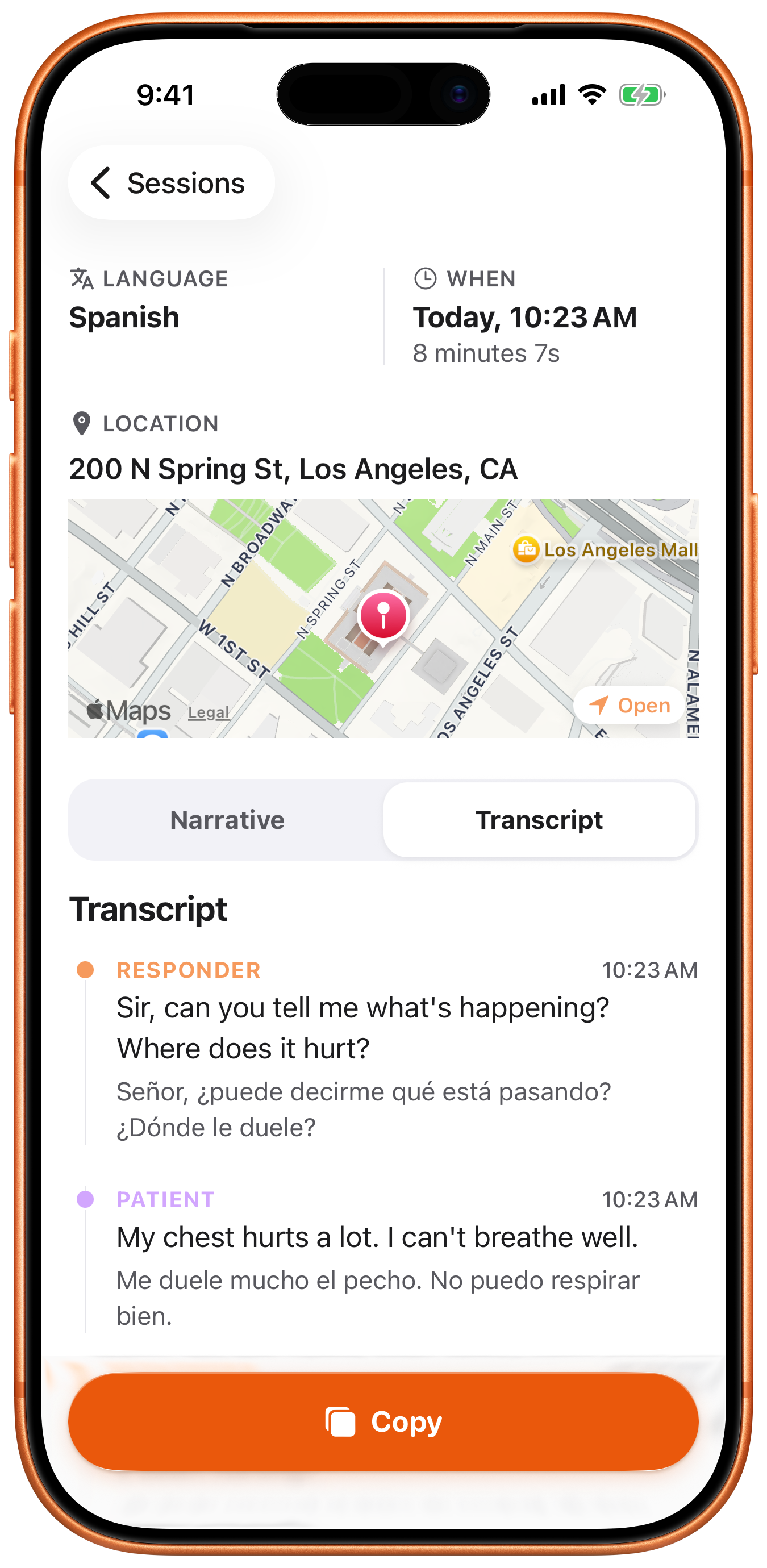
You can tell your city attorney that you take language access seriously. A clear record helps you show it, too.
Pilot departments in Colorado and California include Adams County, Brighton, and Fairfield. Crews rate vitalvoice 5.0 on the App Store. Its CityEMT pilot had a 95% Net Promoter Score (NPS), a measure of how likely users are to recommend a product.
The same discipline protects you elsewhere in the chart. If narrative quality is also a live issue, our guide to writing EMS narratives covers the fundamentals.
This guide is not legal advice. Title VI duties depend on your funding and local laws. Ask your city attorney what applies to your department.
Quick answers
Does Title VI apply to fire departments? Often, yes. Title VI applies to programs that get federal funds. Fire departments may get those funds through grants, reimbursements, or money passed through a city or county. Ask your attorney what applies to your department.
What counts as meaningful language access? There is no single checklist. In general, know which languages people speak in your area. Write a plan, give crews a real way to communicate on scene, and keep a record of what you did.
Is using a family member as an interpreter a Title VI problem? It can be. Federal guidance warns against relying on family members, especially children. They may make mistakes, private details may be exposed, and the department may have no record of the language help it gave.
See what the record looks like
Chiefs and city administrators: Book a 15-minute demo. See the on-scene steps and the record they create. Then decide if vitalvoice fills the gap in your language-access plan.
Crews: Download vitalvoice from the App Store. Try it on a real call and share the result with your chief.