Stop Asking Kids to Interpret: The Hidden Cost of the Family Workaround
On LEP calls, crews often have no interpreter but the patient's child. What that costs the kid, the patient, and the department — and why it's avoidable now.
By vitalvoice Team
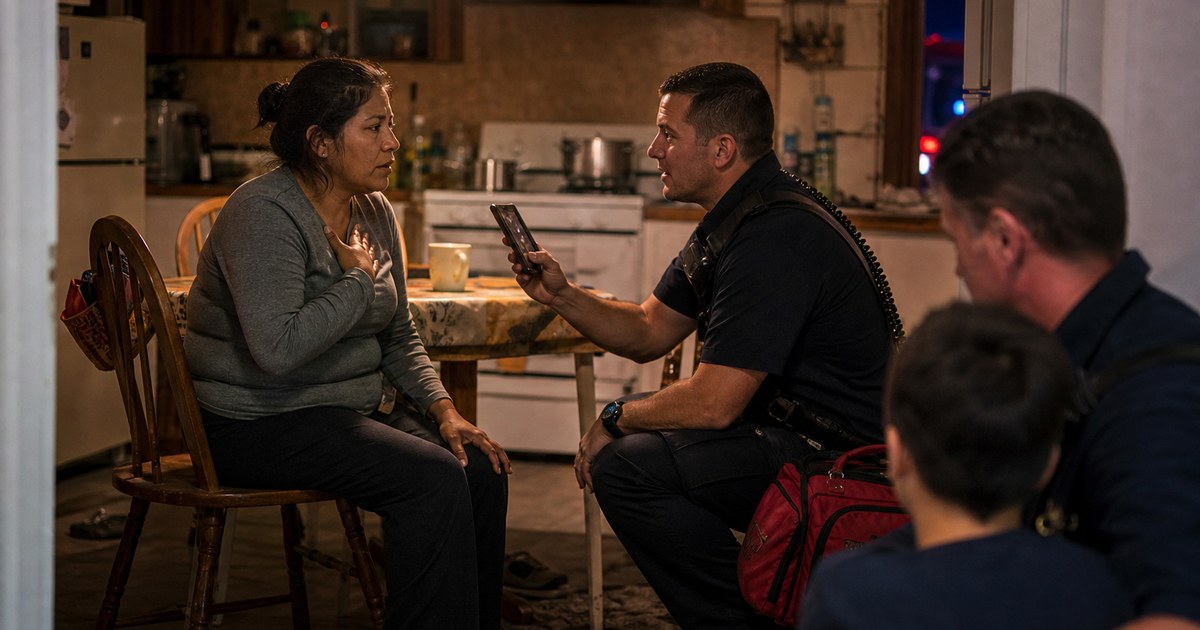
It is 11:40 at night. The kitchen light is on. A woman sits in a chair away from the table.
One hand is flat against her chest. She takes short breaths. Her husband is at work.
The crew has been there for three minutes. They have asked four questions. She has not understood them.
There is one other person in the room. He is eight. He is standing in the doorway, and he speaks English.
Everyone’s eyes go to him.
He does the job. He asks his mother what hurts. He listens.
Then he tells four adults in uniform what she said about her chest pain. He works hard to get it right. Like many children, he knows this moment matters.
This scene is a mix of many real situations, not one real call. It is also familiar to crews in communities with limited-English-proficiency (LEP) households. LEP means a person does not speak English well enough for a clear medical conversation.
Why crews do it
Because no one else is there.
The interpreter line may take minutes, if the building has a signal at all. The patient is getting worse. The child is right there and speaks both languages.
A medic must choose between a delay and asking the child. With only those two choices, asking the child makes sense.
This is not poor judgment by the crew. The system gave them no fast option. The department did not choose this problem. It simply had nothing faster to give its crews.
What it costs the child
Think about what the child must do. A third grader must hear adult medical details about his own mother. It may be the worst night of his life. He must also repeat every detail correctly.
He may hear his mother describe pain she hid from him. He may also hear questions about medicine, alcohol, pregnancy, or abuse. If something goes wrong later, he may blame the words he chose.
Children should not be responsible for getting a parent’s medical history right. Across healthcare, using minors as interpreters is broadly recognized as harmful practice for these reasons. Until now, departments have not had a practical choice at 11:40 at night.
What it costs the patient and the crew
The child is not a poor interpreter because he is careless. He is a poor interpreter because he is eight.
He does not know the medical words. He may not know them in English or in his mother’s language. “Pressure,” “radiating,” “dizzy,” and “numbness on one side” may all be new to him.
He uses the closest words he knows. The crew then puts those words in the chart.
Mistakes can go both ways. He may soften the medic’s words because they scare him. He may shorten his mother’s answer because he lacks the words. No one in the room knows what got lost.
Crews may miss another problem: patients can hide facts from their children. Think about what a mother may not say through her son. Maybe the pain happened before, but she did not get help.
Maybe the answer involves drinking, money, or fear. She may hold back to protect her child, even when the crew needs a full history.
The story has now passed through two filters: the mother and the child.
What it costs the department
Now look at the scene as a chief.
There is no record of the exact conversation. The child had no training or interpreter credential. He was not neutral, and he had many reasons to change the words. Yet the chart from that talk is a legal document with your department’s name on it.
Picture a review two years later. A city attorney asks who interpreted. The answer is the patient’s child.
There is no transcript. Nothing shows the questions or answers.
Crews describe this problem in plain words. Dawson Deldotto, a paramedic intern with Fairfield Fire Department, said: “Usually we’re asking family on scene and they’re a little hectic, they’re all over the place.” That is the workaround many departments have used.
Departments that receive federal money must also think about compliance. Meaningful language access is not optional. A minor family member is not a language access plan. Read more in our guide to Title VI and LEP obligations for fire departments.
The fix already fits in a turnout pocket
Crews kept using this workaround because the other option took too long. That is no longer true.
Real-time interpretation runs on the phone a crew already carries. It connects in under five seconds. It detects the language, so no one must guess what a dazed patient speaks.
It supports 63 languages and translates both ways. It also works offline in basements, rural dead zones, and stairwells with no signal.
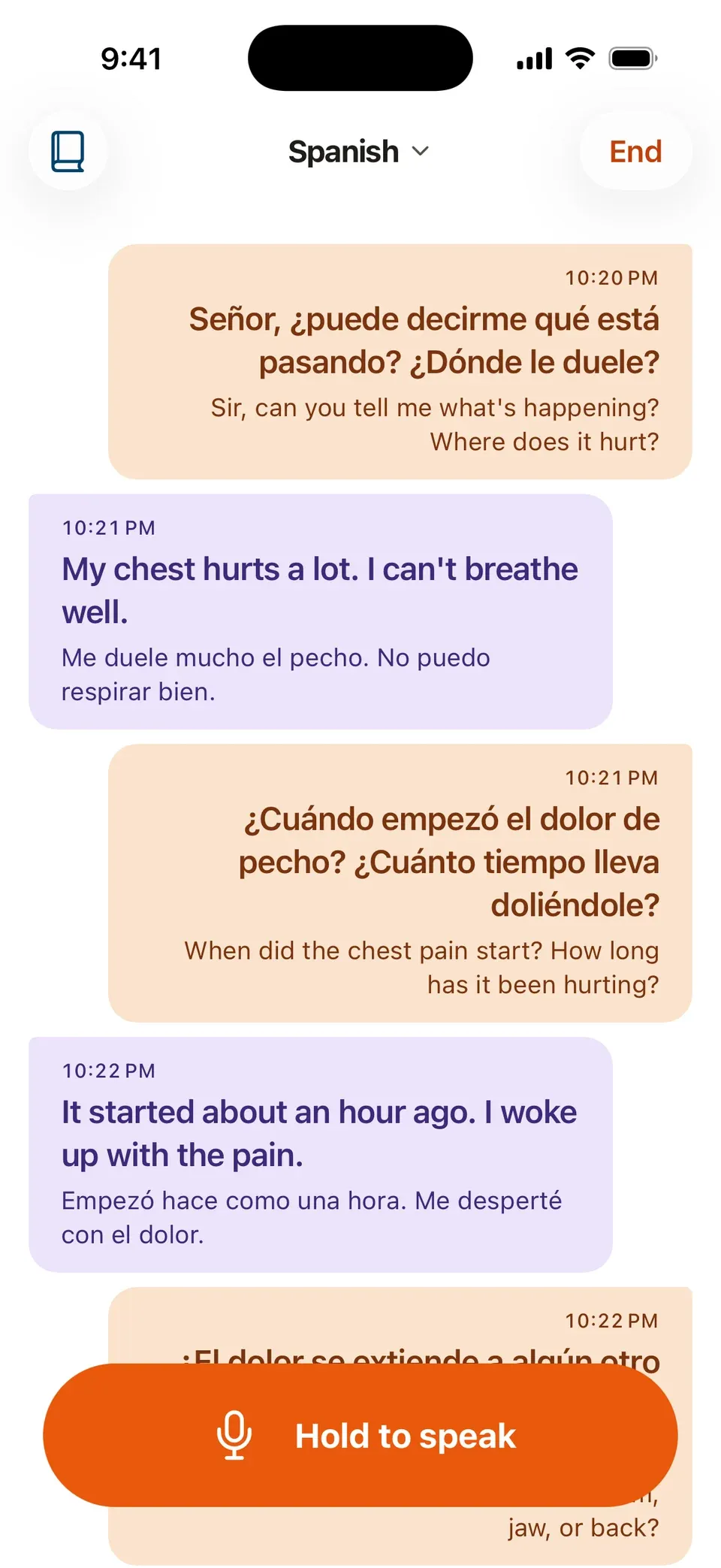

The app captures a timed record of the encounter. The conversation can go into the chart instead of staying in a child’s memory.
It is HIPAA-compliant with a Business Associate Agreement (BAA), which a family interpreter is not and never was.
Pilot departments in Colorado and California are using it now. Crews rate it 5.0 on the App Store. The CityEMT pilot returned a 95% Net Promoter Score (NPS).
Crew support matters because they decide whether a tool gets used on a hard call. For the budget side, read the real cost of per-minute interpretation.
Five years ago it wasn’t a choice. Now it is.
Five years ago, the child in the doorway may have been the only interpreter in the room. Using him was a defensible choice by a good crew with no better option.
Today there is another option. The standard of care moved with it. The eight-year-old is not the only interpreter available anymore. He becomes the choice when the department gives crews no other tool.
No crew wants to put a child in the middle. Give them a better tool.
Quick answers
Can children interpret in medical emergencies? They should not. Children lack medical vocabulary in both languages, carry no accountability for accuracy, and are being asked to process adult information about a parent in crisis. Using minors as interpreters is widely recognized as harmful practice across healthcare.
Why do EMS crews use family members as interpreters? Because on scene, the family member is often the only person in the room who speaks both languages, and a phone interpreter line can take minutes to connect. It is a workaround born of having no faster option, not a lapse in judgment.
What should a department use instead of a family interpreter? On-device interpretation that connects in seconds, auto-detects the language, works without cell signal, and produces a timestamped record of the encounter. That gives crews a neutral interpreter and gives the department documentation of what was actually said.
Take the kid out of the middle
Chiefs and city administrators: Book a 15-minute demo. Bring your language-access questions and your city attorney’s questions. We will cover both in the same call.
Crews: Download vitalvoice from the App Store. Try it on your next call with a language barrier. Then tell your chief how it compared with your current process.