How to Document a Patient Refusal: The Chart That Protects Your Career
A patient refusal is the highest-risk call you run. Here's what a defensible refusal narrative has to show, with strong and weak example language.
By vitalvoice Team
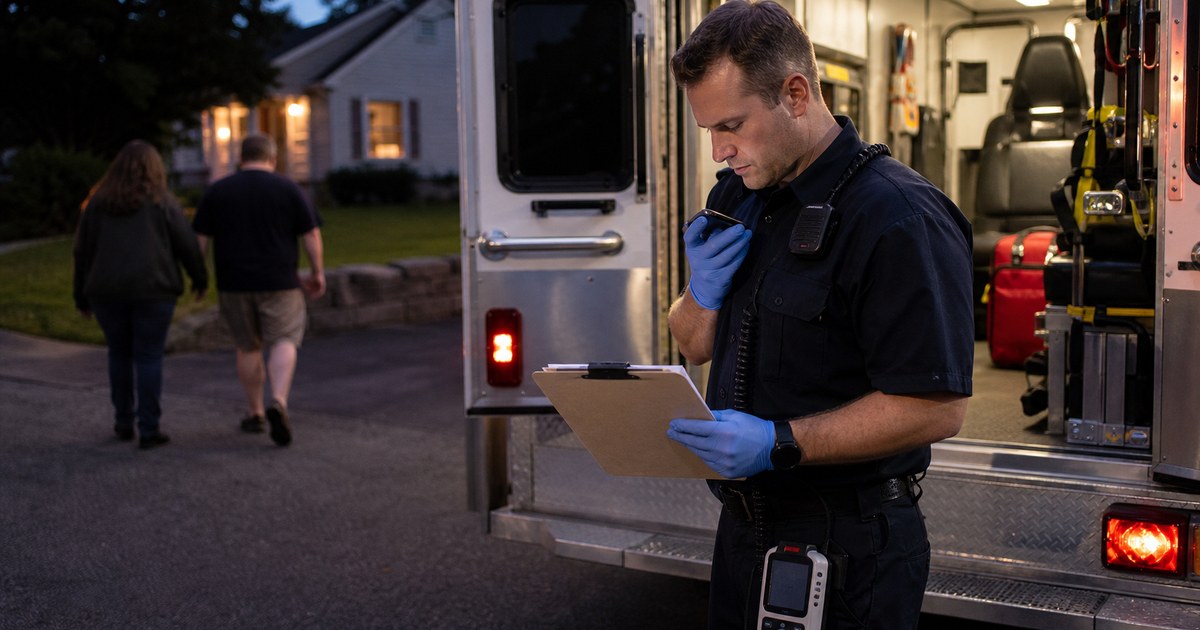
The patient sits on the curb and tells you they are fine. Maybe they hit their head. Maybe their blood sugar is low. Maybe they do not want the bill. You explain why they should go to the hospital. They say no and sign the form. Eleven minutes later, you clear the call.
That is the riskiest chart you will write all shift.
One important note: always follow your department’s refusal protocol and your medical director’s guidance. This article explains how to write a narrative. It is not medical or legal advice.
Why refusals carry more risk than the calls you transport
When you transport a patient, other people add to the record. The emergency department (ED) gets a chart. A doctor examines the patient. If the crew missed something on scene, the hospital record shows what happened next.
A refusal has no ED chart and no second exam. Your narrative may be the only record of what happened.
If that patient later dies or crashes while driving home, others may turn to your narrative. People you have never met may read it months or years later, one sentence at a time.
That long gap between the call and the review is easy to underestimate.
What a defensible refusal narrative shows
A refusal chart must show that the patient could make the decision, understood the risks, and chose to refuse care. Six parts help show that.
Describe capacity. Do not rely only on “A&Ox4,” which means alert and oriented to person, place, time, and event. Write what you observed. Did the patient answer clearly? Did they know the day, the place, and what happened? Note signs such as alcohol odor, slurred speech, or unusual skin signs. Capacity is a clinical finding, so chart the facts behind it.
State the risks you explained. Do not write only “advised of risks.” Record what you told the patient in plain words: “I told him a head injury can bleed slowly, that he could get sleepy or confused in the next few hours, and that this can be fatal.”
Show that the patient understood. Record what the patient repeated back or what question they asked. Their own response shows what they understood.
List the other choices you offered. These may include an ambulance ride, a ride from someone else, or a visit with their own doctor that day. Write what you offered and what the patient declined.
Name the witnesses and their roles. List the other medic, engine officer, spouse, or anyone else who heard the conversation. Use names and unit numbers, not only “family present.”
Record a full set of vital signs. A refusal chart with no vital signs may look like the crew did not assess the patient. If the patient also refused vital signs, state that. Then record what you could observe without touching the patient.
Quote the patient throughout the narrative. Their exact words give the clearest record of what they said and chose.
Also record your callback instructions. For example: “I told her to call 911 again if anything changed, day or night, and that we would come back with no problem.” This shows the patient knew they could call again.
Weak versus strong, side by side
Here is the refusal narrative most departments see, de-identified:
Pt A&Ox4. Advised of risks. Pt refused transport and signed refusal form. Released to self. No further needs.
Every word may be true. But the note leaves key facts out. It does not say which risks you explained, what the patient understood, which other choices you offered, who witnessed the refusal, or what you found during the assessment.
The same call, written to hold up:
Pt is a 40s-year-old male, ground-level fall from standing, struck right side of head on pavement. No LOC per pt and per his brother, who witnessed the fall. Pt alert, oriented to person, place, day and event. Speech clear, gait steady, PERRL, no alcohol odor, skin warm and dry. Full set of vitals within normal limits (see vitals). I explained that a head injury can bleed slowly inside the skull, that he could become sleepy, confused, or unresponsive over the next several hours, and that this can be fatal. Pt repeated back, “so it could start hours later, got it.” I offered transport by ambulance, transport by his brother to the ED, and follow-up with his own doctor today. Pt declined all and stated, “I’m not going to the hospital for a bump, I’ve got work in the morning.” I advised him not to be alone tonight; his brother agreed to stay and was present for this conversation. I told pt to call 911 again immediately for headache, vomiting, confusion, or drowsiness, and that we would come back with no issue. Pt verbalized understanding. Refusal signed by pt, witnessed by Engine 2 Capt. Ramirez. Pt ambulatory to residence with brother at time of clear.
Same call. Same eleven minutes. The second note gives a reviewer the facts needed to understand the patient’s choice.
The example uses common EMS shorthand. LOC means loss of consciousness. PERRL means the pupils are equal, round, and react to light.
The timing trap
Here is the quiet problem: short refusal calls often get written last. Crews may chart transports first because there is more to record. By the end of the shift, key details from the refusal may be gone.
You remember that you explained the risks. But you may forget that the patient said, “so it could start hours later.” Then all you can write is “advised of risks, pt verbalized understanding.”
Exact quotes often fade before the basic memory of the call. Yet those quotes are a key part of a refusal chart. Our guide to writing an EMS narrative explains the full structure. For a refusal, waiting to write can cost you the details you need most.
The answer is not to write faster. It is to write sooner.
Capture it while you’re still standing there
This is where vitalvoice can help. With Smart Dictation, you speak the details while you are still on scene. Describe what you saw, what you explained, what the patient said back, and who witnessed it. The app puts those details into your department’s refusal format. You read the draft, correct it, and sign it. Nothing is filed until a medic approves it.
If you want to capture the conversation as it happens, Ambient Scribe listens during the call. It builds the draft from what people said, including the patient’s words.
Both tools work offline, including in basements and on rural roads. vitalvoice is HIPAA-compliant with a signed Business Associate Agreement (BAA). Transcripts stay on the device and are erased at the end of the shift. They never sit on our servers.
Quick answers
What has to be in a patient refusal narrative? Describe the facts that show the patient had capacity to decide. List the risks you explained, proof the patient understood, other choices you offered, witnesses by name, a full set of vital signs, and the patient’s own words.
Is “pt refused, signed form” enough? No. A signature only proves the patient signed a form. It does not show that the patient had capacity, understood the risks, and made an informed choice. The narrative must show those facts.
When should I write a refusal chart? Write it on scene or right after the call, before exact quotes fade. If you wait for hours, you may lose the details that support your decisions.
Try it on your next refusal
Crews: Download vitalvoice from the App Store. You get two free sessions in each mode, with no sales call. Use one on your next refusal. Then compare the draft with the note you would have written from memory at hour 47.
Chiefs and training officers: Book a 15-minute demo if refusal charts keep coming back from quality assurance (QA). We will show you the review-and-sign step. Crews rate vitalvoice 5.0 on the App Store, and the CityEMT pilot earned a 95% Net Promoter Score (NPS).