SOAP vs. CHART vs. DCHART vs. DRAATT: EMS Narrative Formats Explained
SOAP, CHART, DCHART, and DRAATT explained in plain words: what each letter means, when each narrative format fits, and how to pick the one your crew uses.
By vitalvoice Team
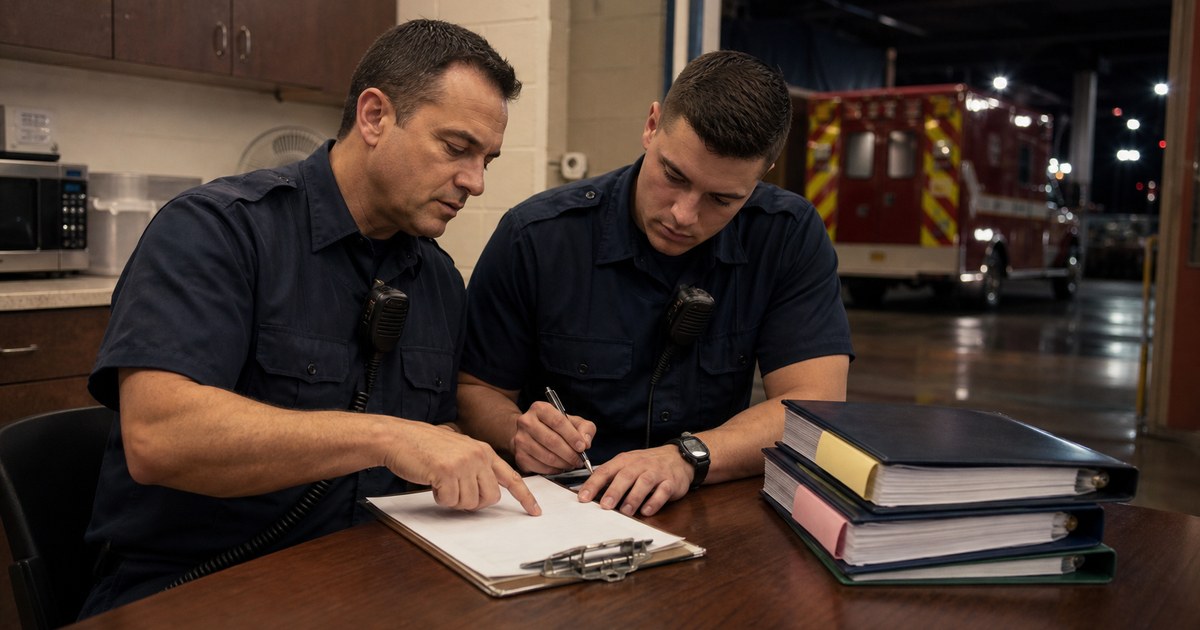
You are three shifts into a new department. You wrote SOAP notes all through school. Then your field training officer (FTO) reads your chart and says, “We use DCHART here.”
No one gives you a guide. You read old charts at 2 a.m. and hope you got it right.
This is the guide you needed. It explains four common formats, what each letter means, and when each one fits. You will also see a short example of each format. Then we will answer the main question: which one should you use?
SOAP
Subjective, Objective, Assessment, Plan.
SOAP started in hospitals, and many medics learn it in school. It splits the chart by what people said and what you saw. Subjective is what the patient and bystanders told you. Objective is what you saw or measured.
Assessment is what you think is happening. Plan is what you did and where the patient went. SOAP fits a simple medical call, such as chest pain, shortness of breath, or a diabetic emergency with a clear history.
S: 58 y/o male reports crushing chest pressure that started 30 minutes ago while mowing the lawn. Rates it 8/10. Denies shortness of breath. O: Alert and oriented. Skin pale and diaphoretic. BP 148/92, HR 96, SpO2 96% on room air. 12-lead shows no ST elevation. A: Chest pain of suspected cardiac origin. P: 324 mg aspirin chewed, IV access established, transported to receiving facility.
SOAP can be awkward in EMS. It has no clear place for dispatch details, the response, or what you found on scene. Crews may put those facts under Subjective, even though they do not fit there.
CHART
Chief complaint, History, Assessment, Rx (treatment), Transport.
CHART puts SOAP in an order that fits the back of an ambulance. It starts with the chief complaint. It also gives transport its own section.
In EMS, how the patient did on the way is part of the story. CHART gives you a clear place to write, “pain dropped to 3/10 en route, vitals unchanged.” You do not have to squeeze that fact into the plan.
C: Fall from standing height, right hip pain. H: 81 y/o female, tripped on a rug. No head strike, no loss of consciousness. History of osteoporosis. On a blood thinner. A: Right leg shortened and externally rotated. Pain on palpation of right hip. Vitals stable. R: Padded splinting, pain managed per protocol, moved to cot by scoop. T: Transported non-emergent to receiving facility. No change en route.
DCHART
Dispatch, then Chief complaint, History, Assessment, Rx, Transport.
DCHART adds one letter to the front of CHART. The D section says why you were sent and what you found when you arrived. It can include the dispatch complaint, response mode, and scene conditions.
Dispatch information is often wrong. The difference between the call you expected and the scene you found can matter for both patient care and a legal review.
D: Dispatched emergent for “unconscious party.” Arrived to find patient seated on the front steps, awake, family present. C: Weakness and confusion. H: 67 y/o male, sudden left-sided weakness about 45 minutes ago per family. History of atrial fibrillation. A: Left facial droop, left arm drift, slurred speech. Blood glucose 104. Stroke scale positive. R: Oxygen per protocol, IV access, last known well time confirmed with family. T: Emergent transport to the nearest stroke center. Stroke alert called en route.
DCHART is common in fire-based EMS. Crews who learned SOAP in school may have to learn DCHART on the job.
DRAATT
Dispatch, Response, Arrival, Assessment, Treatment, Transport.
DRAATT is the most time-based format of the four. It follows the call from the tones to the hospital bed. It covers why you were sent, your response, what you saw on arrival, your assessment, treatment, and transport.
This format works well when the order of events is the story. Examples include an extrication, a fire, a scene with many patients, or a call that may be reviewed later.
D: Toned at 1412 for a two-vehicle collision with reported entrapment. R: Responded emergent, arrived 1419, no delays. A: Two vehicles with heavy front-end damage. Second patient still seated in the driver’s seat, restrained, door jammed. A: 34 y/o female, alert, complaining of chest and left knee pain. Lung sounds clear. Vitals within normal limits. T: Cervical collar applied, door removed by rescue, IV access established. T: Transported emergent to trauma center. No change in status en route.
Departments may define the letters in different ways. Some use “Actions” for the second A. Some split treatment into different sections.
Others use their own mix of formats. That is normal. Follow the format your department has written down, not one you learned somewhere else.
Example shorthand: y/o means years old; BP means blood pressure; HR means heart rate; SpO2 means blood oxygen level; and IV means an intravenous line.
Which format should you use?
Use the format your department requires.
That is the whole answer. No format is better than the others in every way. What matters is that your agency uses one format the same way. Then a QA reviewer, medical director, or attorney can find the same details in the same place.
Being consistent matters more than personal choice. A great SOAP note in a DCHART department still makes someone hunt for details.
If your department has not written down its format, ask your training officer. Our guide on how to write an EMS narrative explains what a strong report needs in any format.
All example fragments in this post are illustrative and de-identified — no real patients or calls.
Quick answers
What is the difference between SOAP and CHART? SOAP splits the chart by what the patient told you versus what you observed. CHART reorders it for EMS, giving the chief complaint its own opening section and transport its own closing one.
What does DCHART stand for in EMS? Dispatch, Chief complaint, History, Assessment, Rx (treatment), Transport. It’s CHART with a dispatch section in front, so you can record what you were sent for and what you actually found.
What is the DRAATT narrative format? Dispatch, Response, Arrival, Assessment, Treatment, Transport — a chronological format that walks the call from the tones to the hospital. Useful when the sequence of events matters.
Let the app handle the format
The formats are easy to learn. Typing them out on every call is the hard part. vitalvoice handles the first draft.
If your department already has a narrative template, vitalvoice is configured to match it section by section, heading by heading, down to required terminology and call-type rules. SOAP, CHART, DCHART, and DRAATT are starter formats for departments that do not already have a defined template. You review the draft, make changes, and sign it before it enters the electronic patient care report (ePCR).
It also works when the patient does not speak English. It supports 63 languages and works offline in a basement or dead zone. It is HIPAA-compliant with a signed Business Associate Agreement (BAA). Transcripts stay on the device and wipe at shift end.
Crews: Download vitalvoice from the App Store and try it on your next call. It is rated 5.0. Use Ambient Scribe to draft from the call itself. Or use Smart Dictation to turn a voice memo into a full narrative.
Chiefs and training officers: Book a 15-minute demo to see your department’s format in the app. Our pilot crews gave vitalvoice a 95% Net Promoter Score (NPS).