How a Fire Department Decides What Tech to Buy — Notes from Deputy Chief Eric Linnenburger
Deputy Chief Eric Linnenburger on how Westminster Fire evaluates new technology, why crews hold the veto, and what "firefighter proof" means for vendors.
By vitalvoice Team
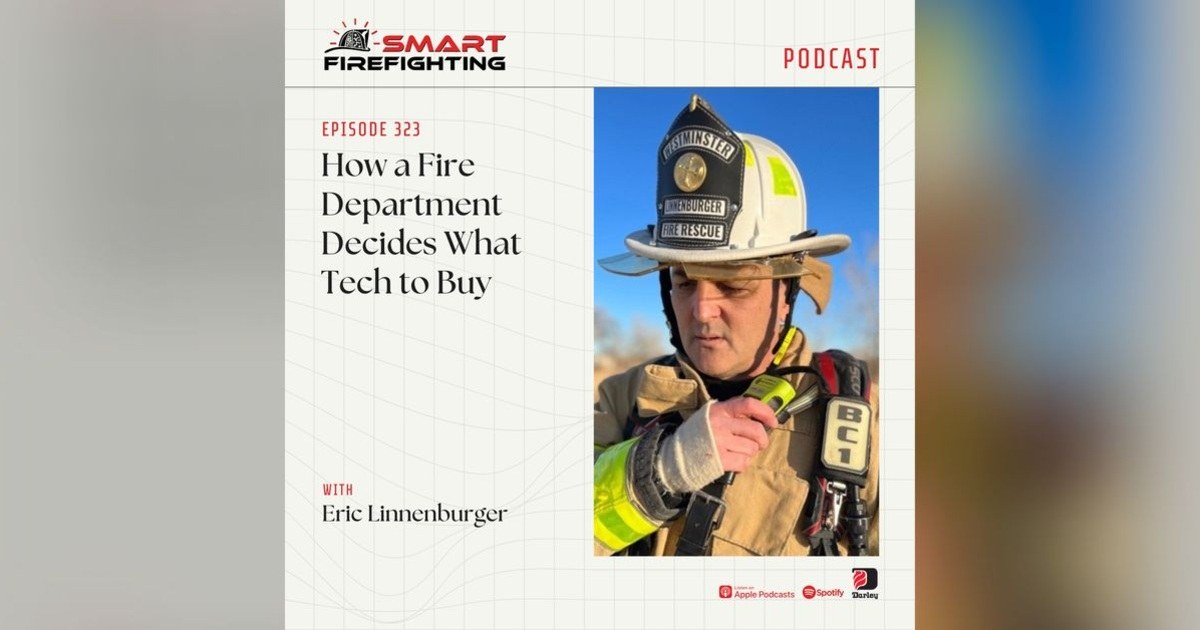
Deputy Chief Eric Linnenburger has spent 26 years at Westminster Fire Department in Colorado. He also hosts the Ops Talk podcast. He spends his own time asking other chiefs how they run their departments.
Kevin Sofen invited him onto the Smart Firefighting Podcast to explain how fire departments decide what technology to buy. Linnenburger gave a practical answer based on real calls and real crews.
The full episode is worth a listen: Smart Firefighting Podcast episode 323. He brought up vitalvoice without being asked. That is why we are writing this. But chiefs can learn even more from what he said before that.
Start with the gap, not the gadget
Linnenburger’s first point was simple. Good technology starts with a problem at the station or on a call. It does not start on a conference floor.
I think a lot of the technology that we’ve seen success in, it really does start at the ground level. It’s identifying a specific gap beyond the flashy stuff. You know, it’s not adding new things, it’s filling them.
Do not add a tool just because it looks new. Fill a real gap. If you cannot name the job your crews cannot do today, you are shopping instead of solving.
Get the right people in the room early
Once Westminster finds a gap, it brings “the right stakeholders to the room,” as Linnenburger put it. These are the people who will use, support, or approve the tool. They include technical experts, IT security, training staff, and line battalion chiefs. Dispatch joins too if the tool affects dispatch. These people, in his words, “know what’s gonna work and what’s not.”
Many failed rollouts follow the wrong order. The department picks a tool first. Three months later, IT finds a security problem. A few early meetings can prevent that. Bringing the right people in too late can end the whole project. Our 30-day tech pilot playbook turns this idea into clear steps.
The crew is the veto
The product still has to pass its hardest test: the crew must want to use it.
if you give them challenges in the beginning, it’s probably going to be a non-starter.
As Linnenburger points out, a crew on a call already has “five screens in front of them.” No one reads a manual at 3:00 a.m. while a patient is on the ground. If the tool is confusing the first time, the crew may never open it again.
The part where he mentioned us
About 19 minutes in, Linnenburger brought up a tool Westminster is trying. His framing is more honest than ours would be:
It’s called Vital Voice and it’s a transcription and AI translation service. This is just a simple app on the cell phone… I was a little skeptical at first because we have plenty of AI transcription out there, but none of them are doing the things that they can do with security… it’s so darn simple to use and it’s inexpensive to get into it.
Two details matter here. Westminster is in beta test mode with vitalvoice. Those are his words. This is not a signed, department-wide rollout. He also said our Criminal Justice Information Services (CJIS) compliance work is in progress. It is not done, and we will not claim that it is.
He also explained why his IT department cared. We hear this story often, but rarely this plainly:
found out that we were using Google Translate and the free services that are out there and [it] scared the daylights out of them because of the security risk. And, you know, they’re not HIPAA compliant either.
Many departments are not working without technology. Crews are using apps on personal phones that the department did not approve. Patient information may go to places no one reviewed. A department can start fixing that problem with a written AI policy.
”Firefighter proof” is now our standard
The phrase we cannot stop thinking about:
when companies find a way to kind of fill those voids and make their product intuitive enough that it’s firefighter proof, you’re going to find some success.
“Firefighter proof” is clear and easy to test. Linnenburger tested it without meaning to:
we used it on a scene the other day, once I figured out how to use it, it worked really well. And I translated Arabic, like we would have never been able to translate Arabic before.
The chief’s takeaway:
It told me right there that it was intuitive… he didn’t take the time to actually watch the videos and learn it upfront, but it was intuitive enough when he was on scene to work through it and find success.
A firefighter who skipped the training videos translated Arabic on a live call. That is the test. It was not a demo. It was a real scene with a language no one on the crew spoke. That is what on-scene translation must be ready for.
His vendor wishlist, and where we actually stand
Linnenburger closed with three things he wants from vendors. We will grade ourselves on all three.
Clear, predictable pricing. He wants to know “this is gonna be the cost and this is gonna be the cost over time.” Departments receive a low, fixed price for the capabilities they choose. That price does not change with usage, so a busy month does not create a surprise bill.
Updates included in the subscription. New languages and new features do not come with a separate upgrade bill.
Clean APIs and no friction points. An API is the software connection between two systems. We get partial credit here. Westminster’s IT team said, “we were able to push that app out remotely just through our MDM.” MDM means mobile device management, the tool IT uses to manage department phones. But we still have work to do on connections to electronic patient care report (ePCR) systems. We also have more CJIS work ahead. Chiefs should hear that from us now, not find out later.
The other end of this process: Fairfield Fire Department ran a two-month pilot, used vitalvoice 61 times across four languages, and signed.
Quick answers
How do fire departments decide what technology to buy? Start with a clear gap in daily work, not a product. Bring in technical experts, IT security, dispatch, training, and line battalion chiefs early. Crews get the final say because they will not use a tool that slows them down on a call.
What did Eric Linnenburger say about vitalvoice? On episode 323 of the Smart Firefighting Podcast, he called vitalvoice a transcription and AI translation app. He said he was skeptical at first. He also said it is simple to use and inexpensive to get into. Westminster is still in beta test mode with vitalvoice.
What does firefighter proof mean? It is Linnenburger’s phrase for a tool a crew member can use mid-call without training. At Westminster, a firefighter had not watched the training videos but still translated Arabic on scene on the first try.
Thank you, and what to do next
Thanks to Deputy Chief Linnenburger for speaking plainly, and to Kevin Sofen for asking good questions. Listen to the full episode. Its advice can help you judge any new tool, including ours.
Chiefs: Book a 15-minute demo. Bring your operations, security, and pricing questions. We will show you the app and answer them directly.
Crews: Download vitalvoice from the App Store. Your first two translations are free, so you can try it on a real language-barrier call.