How to Pay for Fire and EMS Documentation and Translation Tools
You may not need a new budget line. Here are the grants, current costs, and local funds that can help your department pay for new tools.
By vitalvoice Team
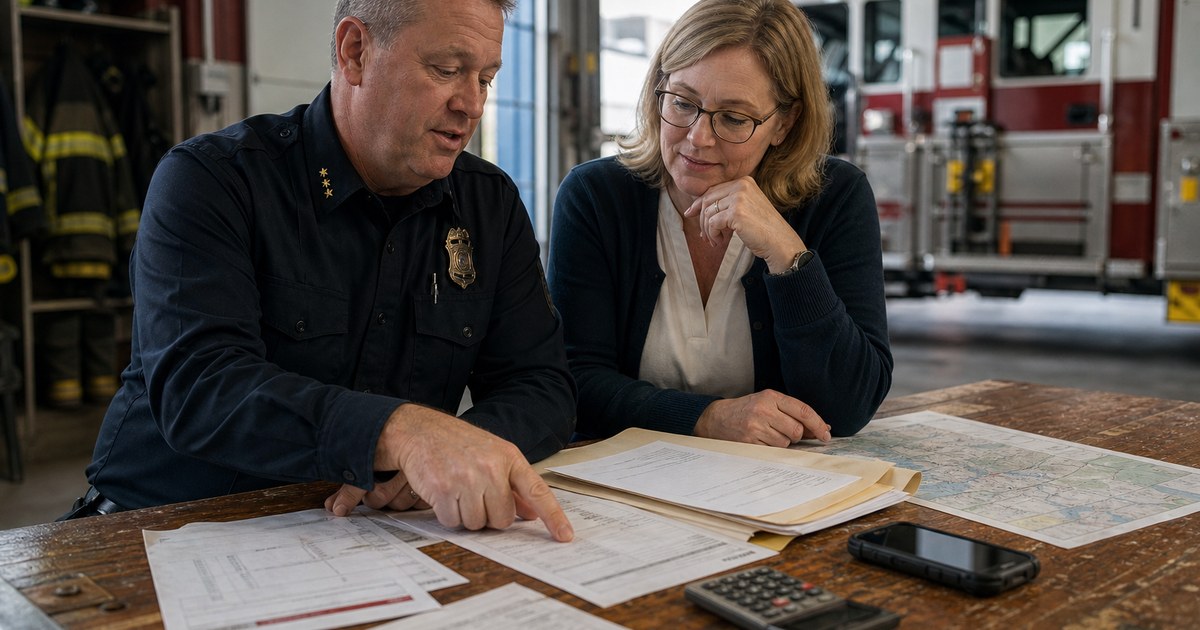
The demo went great. Your crews liked it. Your training officer already asked when they can start.
Then you look at the budget, and there’s no line for it.
This is where many good tools die in fire and EMS. The chief wants the tool. The crews will use it. But no one has a clear answer for how to pay for it.
Here is the good news: you may not need to find new money for a documentation or translation tool.
Start with the money you already spend
Most departments already pay for language help. The cost may be hard to see.
If you pay an interpreter by the minute, you already have a budget line. The total can change each month, but the cost is real and already approved. That may be your best funding path because you are not asking for a brand-new expense.
The pitch is simple. At renewal, replace the per-minute meter with predictable department pricing. The purpose stays the same. The price is easier to plan for. There are no surprise interpretation bills after a busy month. See the math in the real cost of per-minute interpretation.
A cost-neutral request does not add to the budget. That can be easier for a city council to approve. You can say, “This replaces a current cost instead of adding a new one.”
If you do not have an interpreter contract, look at other current costs. Count the crew time spent waiting for help or fixing charts. Those hours are real. Put that number in your request.
Assistance to Firefighters Grants (AFG)
The Assistance to Firefighters Grant, or AFG, is a federal grant run by FEMA. It pays for some equipment and operations that help departments work safely and well.
Some technology may fit if it helps operations or responder safety. But a tool is not eligible just because a vendor says it is. The rules can change each year. Before you apply, read the current Notice of Funding Opportunity and its list of eligible work. Do not take any vendor’s word for it, including ours.
Two things that make an AFG request stronger:
- Tie it to the work, not the product. Reviewers fund a need, not a software name.
- Show the gap with your own numbers. Count calls with patients who speak limited English. Track time spent waiting for an interpreter. Note when crews had to make triage choices with missing details.
SAFER is probably not your grant
SAFER stands for Staffing for Adequate Fire and Emergency Response. It is a federal program that helps departments hire and keep firefighters.
It is not a technology grant. Software and equipment are usually a poor fit. Applying to the wrong program can cost you a full grant cycle.
State EMS and fire grants
This is the path most departments underuse.
States also run EMS and fire grant programs. Some are smaller than federal grants. They may have shorter forms and reviewers who know your area. Some states also offer funds to improve access for people who speak limited English.
Start with your state EMS office. Ask which grants will open in the next two cycles. Regional EMS councils and trauma groups may also have funds for this kind of work.
Local and civic money
Federal and state grants are not your only choices. They may not be the fastest choices, either.
- City language-access or equity funds. If your city has a language plan or equity office, ask about it. Title VI duties may support the request. If Title VI applies, the city must take reasonable steps to provide meaningful language access. Your tool may help.
- Hospital community-benefit programs. Nonprofit hospitals set aside money to help their communities. Better details from the scene can lead to better handoffs at the hospital. Ask your receiving hospital if this shared goal fits its program.
- Local foundations. Community groups and fire department foundations may fund a smaller request. Their forms can be shorter than a federal grant form.
Split the cost with your neighbors
If you’re in an auto-aid or mutual-aid network, you’re already sharing everything else.
Nearby departments can run one pilot together. They can share the work and the results. Each department takes less risk, and the group gets more data for a grant request. Language barriers cross city lines. Your plan can, too.
How to write the justification so it wins
Grant reviewers fund results. They do not fund a list of features.
A reviewer may not care that a tool supports 63 languages or works offline. They want to know what will change for your community. Show them:
- Residents served in their own language. How many residents in your area speak limited English? What happens now when a crew cannot understand them?
- Better triage. Details from the scene help crews make care choices. Focus on patient care, not the technology.
- Clear records. Records with a time stamp that follow HIPAA rules can help protect the department and city.
- Crew time returned to service. Time not spent waiting on hold or rewriting a chart is time available for the next call.
Your own use data may be the strongest part of the request. Use your numbers, not ours. “Our crews used this on 40 calls in eight weeks” is proof. Add the languages and call types. Everything else sounds like a brochure.
Run the pilot first
Many departments start with the grant. Start with the pilot instead.
Test the tool first. Then ask for funds. A short pilot on real calls gives you proof for a grant form or council meeting. Without a pilot, you have a vendor’s claims. With one, you have your own department’s results.
Departments in Colorado and California used this approach. Their crews ran vitalvoice in the field and tracked real calls. Our pilot NPS is 95%, and 93% of firefighters prefer vitalvoice over a phone interpreter line. But your council will care most about your own numbers.
Quick answers
Can AFG grant funds pay for fire department technology? They may. Assistance to Firefighters Grants fund equipment and operations. Some technology may fit if it helps operations or responder safety. The rules can change each year, so read the current AFG guidance before you apply.
Does SAFER cover software for fire departments? Usually not. SAFER is a staffing grant focused on hiring and retaining firefighters, so software and equipment requests are a poor fit. Look at AFG, state EMS grants, or local funding instead.
How do I pay for translation technology with no budget line? Start with what you already spend. At renewal, you may be able to replace per-minute interpreter costs with predictable department pricing that has no per-minute meter. That lets you ask for a change to a current cost instead of a new budget line.
Where to start
Chiefs: Book a 15-minute demo. We will show you how vitalvoice works on scene and help you plan a pilot. You will leave knowing which use data to collect for a grant form or budget meeting.
Crews: Download vitalvoice from the App Store. Try it on your next call. If it helps, send your results and this guide to your chief.